Why every business needs a website
Social pages help you talk to customers; a website helps them find and trust you. Why businesses still need a website, when a big one can wait, and what a good site needs at minimum.
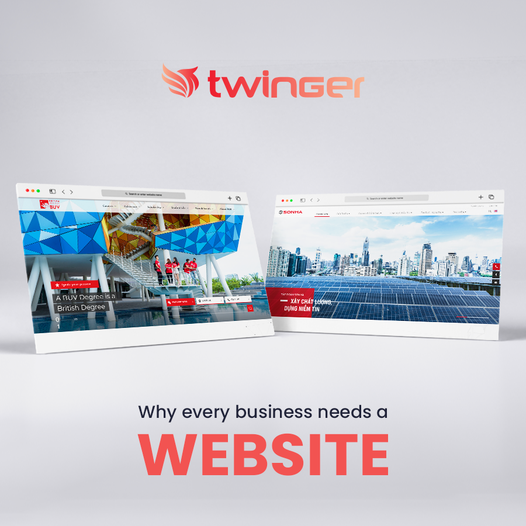
Plenty of businesses sell well with just a Facebook page and Zalo. So do you need a website as well? The short answer: social pages help you talk to customers; a website helps customers find and trust you. The two work together; one does not replace the other.
A social page is rented land; a website is your own asset
A social page belongs to the platform. When the algorithm changes, your posts reach fewer people; when the account is locked or impersonated, there is little you can do. A website runs on a domain registered to your company, the content is yours to decide, and the enquiries people leave belong to you.
Customers look for you on Google, and now on AI too
When people need something, most start with a search: “web design company in Hanoi”, “reliable supplier of X”. More and more ask AI assistants such as ChatGPT or the AI features in Google directly. These tools read public content on the web to answer. A website with clear, well-structured content is how a business shows up in those answers; social posts usually cannot do this.
Partners and large clients check your website first
Corporate clients, foreign partners and investors use your website to verify who you are: legal entity, address, products, past projects, team. A well-made site, bilingual when needed, lets the first meeting start from trust rather than doubt.
Measure results, not just likes
On a website you can see where visitors come from (search, ads, referrals), which pages they read longest and which form they fill in. Connected to a CRM, you can follow a customer from the first visit to a signed contract. That is the data you need to decide where to spend on advertising.
When you do not need a big website yet
Not every business needs a multi-page site from day one. If you are just starting, your offer is simple and most customers come through referrals, a concise company page or a landing page with a contact form is enough. A bigger site makes sense once you have things to say and a plan to bring people there.
What a good website needs at minimum
- Who you are, what you do and for whom, on the very first screen.
- Legal entity, address, phone and quick ways to get in touch (Zalo, call, form).
- Your products, services or past projects, with real images.
- Looks right and loads fast on phones.
- Proper titles, descriptions and page structure so search engines and AI can read it.
- Domain, hosting and admin accounts registered to your company.
- Someone who updates, backs up and monitors it after launch.
If you are planning a new website or rebuilding an old one, see the kinds of websites we build on our Website design page, or read what drives the cost of a website.